Cut My Weekend Chaos in Half: How Smart Lighting Keeps Our Family Calm and on Track
Remember those weekends when you planned to relax but ended up stressed, chasing kids, forgetting chores, and losing track of time? I did too—until I started using smart safety lighting in a way no one talks about: as a quiet guide for our family’s rhythm. It doesn’t just keep us safe—it helps us remember, breathe, and stay on track. This isn’t about fancy tech. It’s about peace, presence, and finally feeling in control—without raising my voice once. What changed wasn’t a new schedule or a parenting book. It was light. Not just any light, but the kind that glows with purpose, shifts with intention, and speaks without sound. And honestly? It’s been the most gentle, effective tool we’ve added to our home in years.
The Weekend That Broke Me
It was a Saturday morning that started with the best of intentions. I had a list—laundry, grocery prep, piano practice reminders, and that long-overdue closet cleanup. My husband was out running errands, and the kids were supposed to be helping. Instead, I found myself shouting from the kitchen, “Did anyone feed the dog?” while stepping over a pile of backpacks in the hallway. My son was glued to his tablet in the living room. My daughter had vanished into her room, headphones on, probably scrolling through videos she’d already seen ten times. The dog was whining. The laundry was still in the basket. And I was standing there, holding a half-folded towel, realizing I’d already said “We need to get things done today” at least five times—and no one had moved.
That’s when it hit me: it wasn’t that we didn’t have time. It was that we had no rhythm. No shared sense of what came next. Every request felt like a demand, every reminder like a scolding. I wasn’t angry at my kids—I was exhausted by the constant effort of being the family’s human alarm clock. I wanted to be present, not pushy. I wanted to enjoy the weekend, not police it. But without structure, everything slipped. And the more I tried to control it, the more disconnected we all felt. That afternoon, as I scrubbed dried spaghetti sauce off a Tupperware lid, I made a quiet promise: there had to be a better way. Something gentle. Something that didn’t rely on my voice being the only signal in the house.
Lighting Isn’t Just for Seeing—It’s for Feeling
We think of light as something that helps us see in the dark. That’s true, of course. But light does so much more. It shapes how we feel. Think about it: when you walk into a room with soft, warm lighting, don’t you automatically slow down? Maybe you grab a blanket, curl up, and breathe a little deeper. But flip on a bright overhead light, and suddenly you’re wide awake, alert, ready to tackle a to-do list. Light doesn’t just illuminate—it influences.
For years, we’ve used safety lighting in our home—motion-sensor lights in the hallway, a nightlight in the bathroom, a porch light that turns on at dusk. We did it for security, for convenience, for peace of mind. But what if those same lights could do more? What if they could help us transition from one part of the day to the next? What if they could signal not just safety, but intention?
I started reading about circadian rhythms and how our bodies respond to different wavelengths of light. Blue light wakes us up. Warm amber light prepares us for rest. Hospitals use color-coded lighting to help patients stay oriented. Schools are experimenting with dynamic lighting to improve focus in classrooms. So why not our homes? Why not use light as a quiet cue—a gentle nudge—that helps everyone in the family know what’s happening next? Not with words, not with yelling, but with a simple, soft glow.
This isn’t about replacing parenting with technology. It’s about using technology to support parenting. To reduce the friction. To make it easier for everyone—especially the kids—to participate in the rhythm of the home without feeling nagged or controlled.
How We Started Using Lights to Track Goals
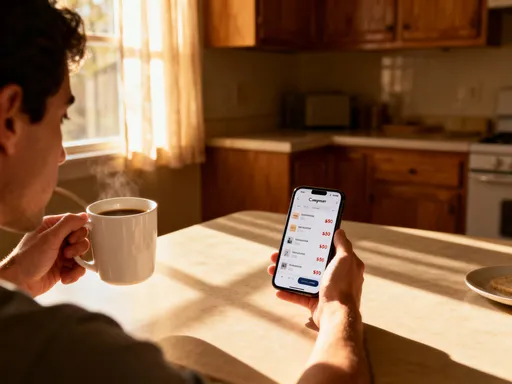
Our first experiment was simple. We picked three weekend goals: finish homework, practice piano for 20 minutes, and help with one chore. Nothing huge. But the challenge wasn’t the tasks—it was remembering to do them, and doing them without resistance. So I set up a small smart bulb in the living room—a color-changing one that connects to our home network. I didn’t need an app to control it every minute. Instead, I programmed it to shift colors based on progress.
Green meant “ready to start.” Yellow meant “in progress.” Blue meant “done.” At breakfast, the light was green. After homework was turned in, I tapped a button on my phone—no big deal—and the light shifted to yellow. When piano practice was over, another tap: blue. And when the kitchen was cleaned after lunch, we all cheered as the light turned a soft, proud blue.
It sounds small. But here’s what happened: my kids started watching the light. My son asked, “Can we get to blue before lunch?” My daughter said, “I want the light to turn blue before my show starts.” It became a game. A quiet, visual scoreboard. And because it wasn’t me saying “Have you done your homework?” but the light showing “We’re still on yellow,” the tension dropped. There was no blame. No nagging. Just a shared goal, and a shared way to track it.
The beauty of it was in the simplicity. I didn’t have to explain an app. I didn’t have to set up a complicated system. Just one light. One color code. And suddenly, we had a way to move through the day that felt lighter, more connected, and way less stressful.
The Bedroom Glow That Gets My Teen Moving
Mornings with a teenager used to be a battle. I’d knock on the door. No answer. I’d open it. “Time to get up.” A groan. A roll over. Another five minutes. Another five. By the time she was out of bed, I was already frustrated, and she was defensive. It wasn’t her fault. It was biology. Teens are wired to sleep later. Their internal clocks run on a different schedule. But life doesn’t wait. School starts at 8:00 a.m., not 9:30.
So I tried something new. I installed a smart light in her bedroom—a lamp that could gradually brighten over 30 minutes, mimicking sunrise. I set it to start at 6:45 a.m. It began with a soft, deep blue glow—barely noticeable. Then, slowly, it warmed to amber, then to a gentle white. No sound. No alarm. Just light, rising like the sun.
The first morning, she walked into the kitchen and said, “Did I sleep through my alarm?” I smiled. “No. But the light was on.” She paused. “Huh. I think I felt it. It was like… the room was waking up before I was.”
Within a week, she was getting up on her own. No yelling. No arguments. And here’s the thing—she wasn’t just on time. She was in a better mood. Less groggy. Less irritated. The gradual light helped her body ease into wakefulness instead of being jolted awake. It respected her natural rhythm while gently guiding her toward the family schedule.
And for me? It meant I could start the morning calm instead of stressed. I could make coffee, check the weather, maybe even read a few lines of a book—instead of standing in the hallway, repeating “You’re going to be late” like a broken record. That one small light didn’t just change her morning. It changed mine.
The Kitchen Light That Says “We’re Done Eating”
Dinnertime used to drag on. We’d finish eating, but no one would move. My husband would keep sipping his tea. The kids would ask for a second cookie. I’d be sitting there, mentally planning the dishes, wondering how to get everyone to just… get up.
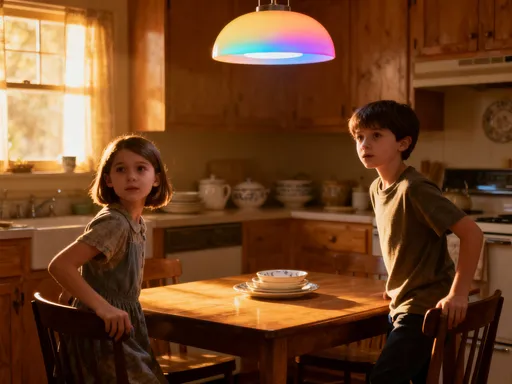
Then I tried a simple trick. I changed the kitchen light. During dinner, it stayed warm and cozy—around 2700K, the kind of light that makes food look golden and conversations feel easy. But as soon as I cleared my plate, I tapped my phone, and the light shifted to a cooler, brighter tone—around 4000K. Not harsh. Not like a hospital. But clear. Alert. “Time to move.”
The first time I did it, my son looked up and said, “Why is the light yellow now?” I said, “It’s not yellow. It’s white. And it means we’re done eating.” He paused. “Oh. So we clean up now?” I nodded. And he got up. No protest. No “Five more minutes.” Just movement.
Within days, it became automatic. As soon as the light changed, the kids started clearing their plates. My husband stopped lingering with his tea. The transition wasn’t forced. It wasn’t a command. It was a shared understanding, signaled by light. And because it wasn’t me saying “Everyone up!” it didn’t feel like control. It felt like coordination.
I didn’t realize how much energy I was spending on transitions until they got easier. That simple shift in lighting reduced the friction of moving from one part of the evening to the next. And it gave me back moments—quiet, peaceful moments—instead of power struggles over who was staying at the table too long.
When the Lights Helped Us Breathe During Meltdowns
Not every breakthrough came during calm moments. Some of the most powerful uses of our smart lighting happened in the middle of chaos. Like the afternoon my youngest, who’s seven, had a full-blown meltdown after his Lego tower collapsed. He was on the floor, crying, hands over his ears, overwhelmed. I knelt beside him, trying to talk, but words weren’t helping. He was too flooded to listen.
Then I remembered the living room light. I’d programmed a “calm” scene—a slow, gentle pulse of soft purple light, like a quiet heartbeat. I turned it on. At first, he didn’t notice. But after a few seconds, his eyes flicked to the wall. Then he stared. The light pulsed—once, twice. Slow. Steady. Predictable.
I didn’t say anything. I just sat with him, watching the light together. After a minute, his breathing slowed. His hands dropped from his ears. He whispered, “It’s like the light is breathing.” I said, “Yeah. Let’s breathe with it.” And we did. In. Out. In. Out. With the rhythm of the light.
That moment changed how I saw safety lighting. It wasn’t just about preventing falls in the dark or scaring off intruders. It was about emotional safety, too. About giving my kids a visual anchor when their feelings were too big to name. The light didn’t fix the problem—the Lego tower was still broken. But it gave him a way to regulate, to come back to himself, without shame or pressure.
Now, when he feels overwhelmed, he sometimes says, “Can we turn on the calm light?” And we do. It’s become part of our emotional toolkit—a quiet, reliable way to find peace when the world feels too loud.
Beyond Safety: Lighting as a Language of Care
What started as an experiment has become part of how we live. The lights in our home aren’t just functional. They’re meaningful. They’ve become a quiet language—one that doesn’t rely on words, but still says, “I’m thinking of you. I care about your rhythm. I want this to be easier for you.”
We don’t use apps or dashboards. We don’t have a smart home command center. Just a few well-placed lights, programmed with intention. The hallway light glows softly at night, not just to prevent trips, but to say, “You’re safe here.” The living room light shifts to warm tones in the evening, signaling, “Time to slow down.” The kids’ bathroom light turns green when it’s their turn for a shower—no more arguments about who went first.
What I love most is how it’s reduced the weight of being the “manager” of our family. I don’t have to be the one remembering everything, saying everything, enforcing everything. The lights help hold the structure. And in doing so, they’ve given me space—to listen, to connect, to just be with my kids instead of constantly directing them.
There’s a deep emotional benefit to this. Less friction means more trust. When kids feel guided instead of controlled, they’re more likely to cooperate. When parents feel supported instead of overwhelmed, they’re more present. And over time, that builds something priceless: family rhythm. A shared sense of how we move through our days, together.
This isn’t about perfection. Some weekends are still messy. Some days, the lights get forgotten. But even then, the intention remains. The light isn’t just a tool. It’s a reminder—of care, of connection, of the quiet ways we can support each other in the chaos of daily life.
So if you’re feeling like your weekends are slipping away, like you’re constantly repeating yourself, like you’re more referee than parent—consider this: maybe what you need isn’t more time. Maybe it’s a different kind of signal. One that doesn’t shout. One that glows.
Because peace doesn’t always come from silence. Sometimes, it comes from light. Not the kind that blinds. Not the kind that demands attention. But the kind that guides. That reassures. That says, without words, “We’re okay. We’re on track. We’re together.”
And honestly? That’s the kind of tech I can get behind. Not flashy. Not complicated. Just wise. Just kind. Just enough to help us live with a little more ease, a little more love, and a lot more calm.