I kept saying ‘We’ll video call soon’—this made it actually happen
We’ve all been there—promising to catch up with parents or grandparents “soon,” only for weeks to slip by. Distance, busy schedules, and tech confusion keep families apart. But what if staying close was as simple as one tap? This isn’t about complicated apps or learning new gadgets. It’s about real moments—laughter, updates, shared memories—made possible through simple, everyday technology that finally works for real lives. I used to say “We’ll video call soon” like it was a promise I could keep without effort. But effort was exactly what I was avoiding. Then one quiet Sunday, my mom mentioned she’d been waiting for me to call. Not demanding, not upset—just softly saying, “I miss seeing your face.” That hit me. Because she wasn’t asking for anything fancy. She just wanted to be part of my day, even for a minute. And I realized: the technology was there. The love was there. But the bridge? That was missing. So I built it. And it changed everything.
The "We’ll Talk Soon" Trap
How many times have you said, “I’ll call Mom this weekend,” only to realize Monday has come and gone? You’re not alone. This isn’t about being forgetful or uncaring. It’s about how life fills up—school pickups, work deadlines, grocery runs, bedtime stories. The people we love most often end up at the bottom of the to-do list, not because they matter less, but because they’re the ones who will understand when we’re late. And that’s both a comfort and a trap.
For older family members, especially parents and grandparents, the silence isn’t always their choice. Many want to connect but feel held back by the very tools meant to bring them closer. I remember my dad sitting with his tablet, muttering, “I don’t want to mess it up.” He wasn’t refusing to learn. He was afraid—afraid of pressing the wrong thing, of hearing static, of not being able to hear his grandkids clearly. That fear builds walls faster than distance ever could. And so, “We’ll talk soon” becomes a placeholder for guilt, not intention.
Meanwhile, milestones pass by—birthdays with only a text, holidays without a face-to-face moment, little updates that never get shared. The emotional cost isn’t dramatic. It’s quiet. It’s the slow fading of shared rhythm, the sense that life is happening in separate lanes. But here’s the truth: both sides want connection. We just need a way that feels safe, simple, and sustainable.
Why Simple Tech Wins Over Fancy Features
We live in a world of smart everything—smart fridges, smart lights, smart speakers. But when it comes to staying close to family, the smartest tech isn’t the one with the most features. It’s the one you don’t have to think about. I learned this the hard way. I once downloaded a “family connection” app for my mom—colorful, full of bells and whistles. It had photo sharing, voice messages, even a digital whiteboard. She opened it once. Then never again. Why? Because every time she wanted to call me, she had to remember a password, find the app, and tap through three screens. By the time she got there, she’d already talked herself out of it.
The breakthrough came when I stopped trying to teach her technology and started designing for trust. I switched to FaceTime—a single icon on her screen. No login. No password. Just tap and go. That one change made all the difference. Suddenly, calling wasn’t an event. It was as easy as picking up the phone. And that’s the key: the best technology for families doesn’t shout its capabilities. It whispers, “You’ve got this.” It removes friction, not adds features.
Think of it like a well-designed kitchen. You don’t want ten knives for ten tasks. You want one sharp knife that works for everything. Same with family tech. One-tap video calls, auto-syncing photo albums, voice messages that send with a long press—these are the tools that actually get used. They don’t require reading manuals or remembering steps. They work like instinct. And when tech feels invisible, connection becomes natural.
Setting Up the First Effortless Call
You don’t need a tech degree to make this happen. In fact, the less you overthink it, the better. The first step is choosing a tool that’s already on the device. For iPhones, that’s FaceTime. For Android, Google Duo or WhatsApp video calls are built in. No downloads. No accounts to create. Just use what’s there. Then, make the action stupidly simple. Here’s what I did: during a weekend visit, I opened FaceTime on my mom’s iPad, tapped my name, and said, “See? This is you calling me.” Then I added the FaceTime icon to her home screen—big and front and center. “If you ever want to see me,” I said, “just tap this. Even if I’m cooking or driving, I’ll know it’s you. And I’ll call you back.”
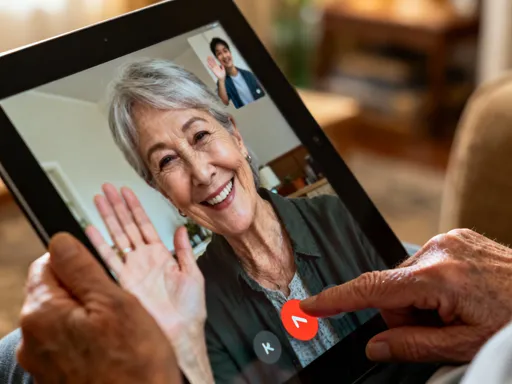
But the real game-changer? I set up a shared link. Using Apple’s “Add to Home Screen” feature, I created a shortcut labeled “Call Family” that launched a group FaceTime with me, my sister, and my mom. One tap, and she could see all of us. No typing. No waiting. Just connection. I showed her once. Then let her do it. Her hands shook a little the first time, but when our faces popped up on her screen, she laughed. “I did it!” she said. That moment wasn’t about technology. It was about confidence.
The setup took less than ten minutes. No cables. No manuals. Just presence. And now, she calls when the sun is rising in her time zone, when the kettle’s whistling, or when she sees a bird at the feeder. Those calls aren’t long. Sometimes under a minute. But they’re regular. And consistency, not duration, is what builds closeness.
Turning Routines into Shared Moments
Connection doesn’t have to be scheduled. In fact, the most meaningful moments often aren’t. It’s not the hour-long holiday call that sticks—it’s the 30-second video of your daughter spinning in her new dress, or your dad holding up a tomato from his garden. These tiny glimpses are the heartbeat of family life. And with the right setup, they can happen without effort.
I helped my mom turn on iCloud Photo Sharing. Now, every photo she takes—her coffee mug, the cat on the windowsill, her knitting project—automatically appears in a shared album. I don’t have to ask. I don’t have to remind her. I just open my phone and there she is, living her day. Sometimes I’ll send a voice note: “Mom, I saw your garden photo—those zinnias are gorgeous!” She loves that. Says it feels like I’m right there.
And it goes both ways. When I’m walking the dog, I’ll hold up my phone and say, “Look, Grandma—here’s Max chasing a squirrel!” No need to stop. No need to type. Just lift, share, and keep walking. These micro-moments don’t replace visits. But they fill the gaps between them. They turn silence into presence. They let love show up in the small spaces.
One morning, I was rushing to get the kids ready for school, feeling overwhelmed. My phone buzzed. It was a video from my mom—just her waving, holding up a piece of toast with jam. No words. Just a smile. But it grounded me. In that second, I wasn’t just a stressed mom. I was someone’s daughter, seen and loved. That’s the power of simple sharing. It doesn’t add to your load. It lightens it.
Bridging the Confidence Gap
Let’s be honest: for many older adults, technology isn’t intimidating because it’s complex. It’s intimidating because they’re afraid of failing. They’ve spent a lifetime being the capable ones—the ones who fixed the sink, packed the lunches, gave the advice. Now, suddenly, their child is telling them how to use a device, and it flips the script. That shift can feel humiliating, not helpful.
So the real work isn’t teaching buttons. It’s rebuilding confidence. I started by labeling my mom’s tablet. A small sticker on the bottom corner of the screen says “Tap here to call family.” Another on the side: “Volume up.” Not because she can’t learn, but because it removes the pressure to remember. It’s like training wheels—temporary, supportive, and quietly empowering.
I also turned on “Auto-Answer” for our video calls. Now, when I call, her tablet answers after five seconds if she doesn’t pick up. She doesn’t have to find the green button. She doesn’t have to worry about missing it. She just hears my voice and looks up. That small feature reduced her anxiety more than any tutorial ever could.
And I gave her a case—one of those thick, rubbery ones that survives drops. Why? Because knowing the device is tough makes her braver. She’ll carry it to the garden, set it on the kitchen counter, hand it to a neighbor to show a photo. The physical durability gave her emotional permission to use it freely. Confidence isn’t built in big leaps. It’s grown in tiny, repeated acts of success.
When Workday Stress Meets Family Calm
There’s a rhythm to the modern workday—emails piling up, meetings back to back, the constant pull of productivity. For so many of us, especially women balancing careers and family, the middle of the day can feel like a tightrope walk. That’s when a 90-second video call can be a lifeline.
I started doing this on tough days. Instead of scrolling through social media during a break, I’d call my mom. Just to say hi. Just to see her face. No agenda. No long conversation. But those moments reset me. Her voice, her kitchen in the background, the way she says, “How’s my girl?”—it pulls me out of the stress spiral and reminds me who I’m doing it all for.
And it’s not just me. My sister, a nurse working 12-hour shifts, does the same. She’ll step outside during her break, call her daughter’s grandparents, and show them a sunset or a funny sign she passed on the road. “It’s like a mental reset,” she told me. “For a minute, I’m not in survival mode. I’m just someone’s daughter, sharing something beautiful.”
These calls aren’t distractions from work. They’re part of it. Because when we feel emotionally grounded, we think clearer, respond better, and lead with more patience. The tech isn’t replacing focus. It’s restoring balance. And in a world that glorifies busyness, a moment of human warmth might be the most productive thing you do all day.
Building a Legacy of Shared Days, Not Just Special Occasions
We used to save family memories for holidays and birthdays. We’d pull out the camera for cake, presents, and posed smiles. But real life happens in between. It’s in the way your mom hums while stirring soup, the way your dad laughs at his own jokes, the way your child drags a blanket everywhere. These are the moments that shape who we are. And now, thanks to simple technology, we don’t have to miss them.
My mom recently sent me a video I’ll never forget. She was in the kitchen, making tea. The camera wobbled, the audio was soft, but there she was—talking to the cat, commenting on the weather, then suddenly looking at the screen and saying, “I just wanted you to see this.” That unscripted, imperfect moment meant more than any holiday card. It wasn’t performance. It was presence.
And now, my kids are growing up knowing their grandparents’ daily lives, not just their birthday personas. They know Grandpa’s garden, Grandma’s cookies, the sound of their voices in the morning. These aren’t distant figures in a photo album. They’re real, present, and part of their world.
That’s the legacy we’re building—not of perfect recordings or high-resolution videos, but of ordinary love, shared freely. Technology, when used with heart, doesn’t steal time. It gives it back. It doesn’t replace visits. It makes them richer, because we’ve been living each other’s lives all along. The calls, the photos, the voice notes—they’re not just data. They’re digital heirlooms. And one day, when our children are grown, they’ll open those albums and say, “This is what love looked like.”