I thought it was just another gadget – How I finally trusted tech to protect Mom
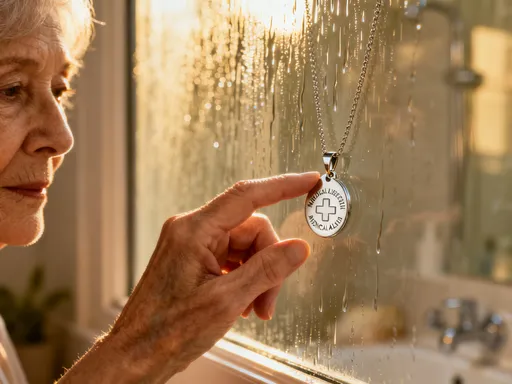
When my mom first agreed to wear a safety pendant, I’ll admit—I doubted it would make a real difference. It looked like just another gadget, another thing to charge, another source of worry. But then came the rainy Tuesday she slipped near the bathroom… and the alert went out before she could even call for help. That’s when I realized: this wasn’t just about technology. It was about peace of mind, for both of us. If you’ve ever lain awake wondering if your aging parent is safe alone, you’re not alone—and there’s a smarter, more reliable way forward.
It’s not about spying—it’s about caring
You know that moment when you suggest a safety device and your mom gives you *that look*? The one that says, “Are you saying I can’t take care of myself anymore?” I’ve seen it. I’ve felt it. And honestly, I get it. For so many of us, the idea of using technology to keep an eye on our parents feels… off. Like we’re crossing a line. Like we’re turning love into surveillance. But here’s what I’ve learned: it’s not about watching. It’s about being ready. It’s not about control. It’s about care.
When I first brought up the idea of a medical alert system, my mom shut it down fast. “I’m not an invalid,” she said, folding her arms. And she wasn’t wrong. She walks every morning, cooks her own meals, still gardens in the backyard. But the truth is, aging doesn’t come with warning labels. One day you’re fine. The next, you’re on the floor, unable to reach the phone. That’s what happened to my neighbor’s father last year. He fell in the kitchen. No one knew for hours. By the time help came, he’d been lying there too long. He never fully recovered. That story stayed with me. Not because I wanted to scare my mom—but because I didn’t want to live with the regret of doing nothing.
So we started talking. Not about devices. Not about emergencies. Just about how she wanted to live—as long as possible, in her own home, with dignity. And I asked her: if something happened, wouldn’t she want someone to know? She paused. Then she nodded. That small moment changed everything. We weren’t talking about fear anymore. We were talking about choice. About independence. About love. And that’s when the conversation shifted. The tech wasn’t the star. It was just the support system for the life she wanted to keep living.
Now, when she wears her pendant, she doesn’t see it as a symbol of weakness. She sees it as her freedom pass. A quiet promise that if she needs help, it’s there—without her having to shout for it. And for me? It’s not a camera. It’s not a tracker. It’s a lifeline. And the trust between us hasn’t been broken. It’s been deepened. Because we faced the hard conversation together. We chose this—together.
Choosing what *actually* keeps data safe – Beyond passwords and promises
Let’s be honest—when you start looking into safety tech, one question keeps creeping in: who’s seeing this? Is someone watching my mom’s every move? Is her data being sold? Is her privacy at risk? I had the same fears. Because once you invite technology into your home, it feels like you’re giving up control. But here’s the thing: not all systems are the same. Some cut corners. Some store data in places you can’t access. Some send information across servers you’ve never heard of. But the right ones? They’re built with your family’s privacy as the top priority.
I spent weeks researching before I picked what we now use. Not because I’m a tech expert—far from it. But because I care. And what I learned surprised me. The best systems don’t just say they’re secure. They prove it. They use something called end-to-end encryption. That means if your mom presses the help button, that signal travels directly to you and the response team—no middlemen, no third parties, no data floating around in the cloud for someone to grab. It’s like sending a sealed letter instead of a postcard. Only the people meant to read it, do.
Another thing I looked for? Local data storage. That means the device keeps information on-site, not in some distant server farm. So if your mom moves around the house, that data stays in the home system unless an alert is triggered. No tracking. No history. No unnecessary records. And when data is stored, it’s anonymized—meaning even the company can’t tie it back to her personally. That gave me real comfort.
I also read the privacy policy. Yes, all of it. And I’m not ashamed to admit I had to look up a few words. But here’s what matters: the company didn’t hide behind confusing language. They said clearly: we don’t sell your data. We don’t share it with advertisers. We don’t use it for anything other than keeping your loved one safe. And they let users decide what gets shared and when. That transparency made all the difference. Because trust isn’t just about the device. It’s about the people behind it.
Now, when I think about the system, I don’t worry about privacy breaches. I know it’s designed to protect her dignity as much as her safety. And that peace of mind? It’s worth its weight in gold.
The setup that doesn’t require a tech degree – Making installation stress-free
I’ll be honest—I was nervous about setting it up. My last attempt at installing a smart speaker ended with me yelling, “Why won’t you connect?!” at a small black cylinder. So when the safety system arrived in the mail, I almost put it aside for “next weekend.” But then I remembered: this isn’t about me. It’s about Mom. So I opened the box. And guess what? It was easier than I thought.
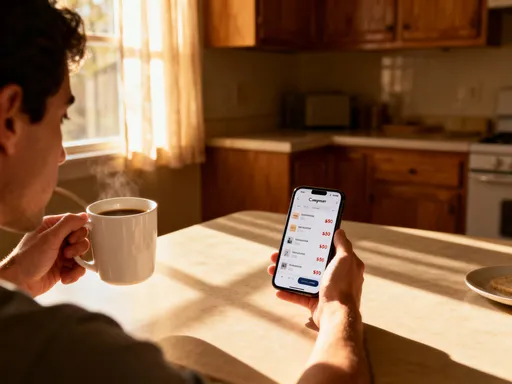
The instructions were clear—no tiny font, no confusing diagrams. Just simple steps: plug in the base unit, press the button, wait for the light to turn solid blue. Then download the app. I did it on my phone while sitting at the kitchen table, and Mom watched, sipping her tea. “Is that it?” she asked. “Pretty much,” I said. And it was. The base unit synced with the app in under a minute. No passwords, no Wi-Fi headaches, no router resets.
One thing that helped? The voice-guided setup. When I turned on the pendant, a calm voice said, “Welcome. Press and hold to test.” No guessing. No menus. Just guidance. And when I labeled the cords with little tags—“Base Unit,” “Charger,” “Extra Battery”—it made it even easier for Mom to recognize them later. She appreciated that. “Now I won’t unplug the wrong thing,” she said with a smile.
We also connected it to my sister’s phone and my brother’s. With just a few taps, all three of us got alerts if Mom needed help. And the app showed us, in real time, whether the system was online, whether the pendant was charged, whether everything was working. It wasn’t about control. It was about connection. Knowing we were all in this together made it feel less like a medical device and more like a family tool.
Looking back, the smooth setup was the first step toward trust. If it had been frustrating, complicated, full of errors—we might have given up. But because it worked the first time, Mom felt confident. And that confidence? It’s contagious.
Alerts that don’t scream panic—just whisper help
One of my biggest worries was false alarms. I didn’t want Mom to feel embarrassed. I didn’t want us all rushing over for nothing. I’d heard stories—devices going off when someone just bent down to tie a shoe, or when the dog jumped on the couch. That kind of noise erodes trust fast. So I made sure the system we chose had smart sensors. And let me tell you—what a difference it makes.
These sensors don’t just detect motion. They understand it. Using something called motion pattern analysis, they learn how your mom moves. Do they see every little step? No. But they notice when a movement is sudden, unbalanced, or ends with a prolonged stillness—like what happens during a fall. And even then, they don’t always trigger an alert right away. Some systems have a short delay, giving her time to get up and cancel it if she’s okay. That’s crucial. It means dignity is preserved. No unnecessary calls. No panic.
When an alert does go out, it’s calm. Not a siren. Not a flashing red light. Just a quiet notification on our phones: “Fall detected at 2:17 PM. Respond or call.” We can reply in seconds. And if we don’t, the system automatically contacts a 24/7 response center. But here’s the best part: the response team doesn’t just send an ambulance. They call her first. “Mrs. Thompson, we noticed a fall. Are you okay? Can you speak?” If she can, they stay on the line until help arrives or until she says she’s fine. If she can’t, they dispatch help immediately. It’s smart. It’s human. It’s exactly what we needed.
I’ll never forget the first time it worked. Mom tripped on the rug but caught herself on the counter. The system detected the stumble but saw she got back up quickly. No alert. No fuss. Just silent vigilance. And later, when she actually did fall—genuinely needing help—the alert came through clear and fast. That balance? That’s what makes the system trustworthy. It doesn’t overreact. It doesn’t underreact. It just… helps.
What happens when the internet drops—or the power goes out
I live in an area where storms knock out power all the time. So when I chose a system, I asked one question: what happens when the lights go out? Because in an emergency, the last thing you want is your safety net failing. I was relieved to learn that the best systems don’t rely on just one lifeline. They have backups. Real ones.
Ours uses cellular backup. That means even if the Wi-Fi dies, the base unit switches to a built-in cellular connection—like a phone. No extra setup. No extra bill. It just works. And the pendant? It connects directly to the base unit via a secure radio signal, so it doesn’t need Wi-Fi at all. That gave me serious peace of mind.
Then there’s the battery. The base unit has a built-in backup battery that lasts up to 48 hours during an outage. And the pendant itself charges daily, but holds a charge for five full days. So even if Mom forgets to plug it in, she’s covered. I tested it once—unplugged everything, waited. The system stayed online. The lights stayed on. And when I pressed the button, the alert went through. Just like that.
But what if the phone lines go down? What if the storm is bad enough to knock out cell towers? Even then, some systems have offline modes. They store the alert locally and send it the moment connectivity returns. It’s not ideal, but it’s better than nothing. And in most cases, the cellular network is more reliable than home internet—especially during emergencies.
Knowing all this changed how I think about reliability. It’s not just about the tech working when things are fine. It’s about it holding strong when everything else fails. And that’s the kind of system you can truly trust.
Teaching Mom (or Dad) to trust it too – The human side of adoption
You can have the most advanced system in the world, but if your parent refuses to wear it, it’s useless. I learned that early. Mom wore the pendant for a day, then left it on the dresser. “It feels strange,” she said. “Like I’m advertising that I’m old.” That hit me hard. Because it wasn’t about the device. It was about how she saw herself.
So we slowed down. We started with a trial. Just two hours a day. She’d wear it while gardening, then take it off. Then it became three hours. Then all day. Small wins. No pressure. And I made sure to celebrate them. “You wore it all morning! That’s great!” I’d say. Not because I was being fake cheerful, but because I wanted her to feel proud, not pitied.
We also let her choose the color. She picked a soft blue—one that matched her favorite sweater. And she picked where to wear it: on a clip, not a necklace. Little choices, but they gave her ownership. This wasn’t something I forced on her. It was something she chose.
I also showed her how it worked. We did a test alert together. She pressed the button. Within seconds, my phone buzzed. I showed her the message. “See? It works. And I can answer right away.” That made it real. It wasn’t magic. It wasn’t scary. It was connection.
Now, she wears it every day. Not because I remind her. Because she wants to. And sometimes, she even jokes about it. “If I fall, at least I’ll be rescued in style,” she says, adjusting the blue clip. That laugh? That’s the sound of trust. Of acceptance. Of a mom who still wants to live her life—on her terms—with a little help when she needs it.
When it worked—moments that made it all worth it
There was no dramatic music. No flashing lights. Just a quiet alert on my phone at 6:48 PM. “Fall detected. Respond.” I tapped it open. My heart jumped. I called her immediately. No answer. I called my sister. She lived closer. She drove over. Within seven minutes, she was at Mom’s door. Mom had slipped in the bathroom, couldn’t get up. But she was alert. She’d tried to press the button, but her hand was shaky. The system had already done it for her.
They helped her up. No broken bones. Just a bruised hip and a shaken confidence. But she was okay. And she kept saying, “I’m so glad it worked. I didn’t have to lie there.” That moment—when she realized she wasn’t alone—that’s what it was all for.
There was another time, late at night. Mom had gotten up to get water. The system noticed she was moving slowly, unsteadily. It didn’t trigger a fall alert—but it sent a gentle check-in to my phone: “Unusual nighttime activity. Confirm all is well?” I called. She answered, a little groggy. “Just thirsty,” she said. But the call made her think twice. “Now that you mention it, I do feel a bit dizzy.” We got her to sit down, drink slowly, and rest. Later, she said, “That little nudge saved me from falling.”
And then there are the quiet moments. The ones no one sees. Like when she presses the button just to test it. “Is it working today?” she’ll ask. And I’ll say, “Yes, Mom. Always.” Because it is. Not just the device. But us. We’re working. Together. As a family. As a team. As people who love each other and want the best.
These aren’t heroic rescues. They’re everyday moments of safety, dignity, and love. And that’s what matters. The tech doesn’t replace us. It supports us. It gives us a little more breathing room. A little more confidence. A little more time together—without fear.
So if you’re sitting there, wondering whether to take that step, I’ll say this: it’s not about giving up control. It’s about gaining peace. It’s not about admitting weakness. It’s about embracing smart care. And it’s not just another gadget. It’s a quiet promise—spoken in beeps and signals—that says, “You’re not alone. We’re here. Always.”