Overwhelmed by your ever-growing to-do list? This simple tracker brought my focus back
We’ve all been there—juggling work, personal goals, and self-improvement, only to feel like we’re spinning our wheels. I used to start strong, then lose motivation by week two. Sound familiar? Everything changed when I started tracking my learning progress not for perfection, but for clarity. It wasn’t about logging hours; it was about seeing growth. This small shift helped me stay consistent, celebrate tiny wins, and actually finish what I started—without burnout. It didn’t take a fancy app or a complete life overhaul. Just one small, honest habit that quietly changed everything. And if you’ve ever looked at your list of dreams and felt defeated before you even began, this is for you.
The Breaking Point: When Passion Projects Turn Into Pressure
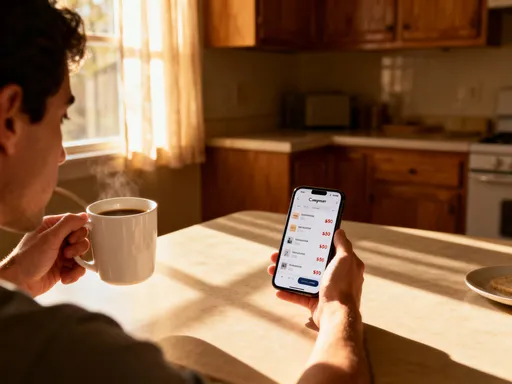
There was a week last spring when everything came to a head. I sat at my kitchen table with my laptop open to three unfinished online courses, a stack of unread self-help books beside me, and a sticky note that read, 'Learn Spanish. Start coding. Read more. Get fit.' It wasn’t a to-do list—it was a guilt list. Every item felt like a promise I’d broken to myself. I wanted to grow, to learn, to be better. But instead of feeling inspired, I felt overwhelmed. Paralyzed, even. I’d tell myself, 'I’ll start fresh on Monday,' but by Tuesday afternoon, I’d already fallen behind. Again. The cycle was exhausting: big dreams, big energy on day one, then silence. No progress. No momentum. Just shame.
What I didn’t realize then was that the problem wasn’t my motivation. It wasn’t that I lacked discipline or willpower. The real issue was invisibility. My efforts were scattered, unseen, and unacknowledged—even by me. I’d spend 20 minutes reading a chapter, watch half a coding tutorial, or try a new recipe, but because it didn’t 'count' as finishing something, I dismissed it. I was measuring success by completion, not by effort. And when you only celebrate the finish line, you ignore the entire journey. No wonder I kept giving up. How can you stay excited about a race when you can’t see how far you’ve come?
That moment at the kitchen table was my breaking point. I wasn’t just failing to meet my goals—I was starting to feel like I couldn’t trust myself. Every abandoned project whispered, 'You said you’d do this. You didn’t.' That voice got louder each week. I knew something had to change, but I didn’t know where to start. I didn’t need more goals. I needed a way to see the ones I already had. I needed clarity, not more pressure.
Discovering the Power of Seeing Progress—Even Tiny Steps
The shift began with something simple: a note on my phone. Not a complicated app or a color-coded spreadsheet—just a blank document titled 'Learning Log.' I didn’t plan it. I just opened it one night and typed: 'Watched 10 minutes of Spanish lesson. Felt tired but did it anyway.' That was it. No fanfare. No judgment. Just a sentence. But something about writing it down made it real. For the first time, that small effort existed somewhere. It wasn’t lost in the noise of my day. It was recorded. Seen.
The next day, I added another line: 'Read 5 pages of Python book. Confused by loops, but wrote it down.' And the day after: 'Listened to French podcast while folding laundry. Didn’t understand much, but kept it on.' I wasn’t doing anything impressive. But over time, something shifted. I started looking at that log not as a report card, but as a story—my story. I could see that even on days when I felt like I’d done nothing, I’d actually shown up. And that changed everything.
There’s a quiet power in visibility. When you can see your progress—even in tiny, messy steps—it builds momentum. It’s like walking through fog and suddenly seeing footprints behind you. You realize, 'Oh, I’ve actually been moving.' That log became my compass. On days when I wanted to quit, I’d scroll back and see weeks of small efforts. Not perfect. Not fast. But consistent. And consistency, I learned, is where real growth lives. It’s not about giant leaps. It’s about showing up, again and again, even when you don’t feel like it. The tracker didn’t make me more talented or smarter. It just helped me see that I was already trying—and that was enough to keep going.
How Tracking Became My Personal Accountability Partner
Here’s the thing about accountability: it doesn’t have to come from someone else. For years, I thought I needed a coach, a group, or a strict schedule to stay on track. But what I really needed was honesty—with myself. And that’s exactly what my simple tracker became: a quiet space where I couldn’t hide. No one else saw it. It wasn’t for likes or praise. It was just for me. But knowing I’d have to log my day—just two minutes before bed—made me more likely to follow through.
Let me give you an example. One evening, I was exhausted after work. My plan was to do a 30-minute yoga session, but I just couldn’t. So I almost skipped it—and almost didn’t log anything. But then I thought, 'Wait. What if I just do five minutes?' So I rolled out my mat, stretched my back, and took ten deep breaths. Was it a workout? Not really. But was it better than nothing? Absolutely. And when I logged it that night—'5 min stretch. Needed it.'—I didn’t feel guilty. I felt proud. Because I showed up. The tracker didn’t shame me for missing my goal. It celebrated the effort I did make.
That’s the magic. It turns 'I failed' into 'I continued.' Over time, this changed how I saw setbacks. Missing a day wasn’t a disaster. It was just data. And data can be worked with. I started asking myself, 'Why did I skip today?' Was I tired? Overloaded? Distracted? The answer helped me adjust, not beat myself up. The tracker wasn’t a judge. It was a witness. And having that silent partner made me more responsible, not because I had to, but because I wanted to. I wasn’t doing it for anyone else. I was doing it for the person who kept showing up, even when no one was watching.
Turning Data Into Daily Motivation, Not Judgment
Let’s be honest—tracking can backfire. I’ve seen it happen. People start with excitement, then turn their tracker into a source of guilt. 'Only 10 minutes today. Pathetic.' 'Skipped two days. I’ve ruined it.' That’s not tracking. That’s self-punishment. And it doesn’t work. I almost made that mistake too. There was a week when I logged only three short entries. I stared at the blank lines and felt that old shame creeping in. But then I paused and asked, 'What is this really showing me?' Not failure. Patterns. That week, I’d had back-to-back meetings, my kids were sick, and I’d barely slept. Of course I had less energy. The tracker wasn’t telling me I was lazy. It was showing me I was human.
That realization changed how I used it. Instead of judging myself, I started learning from it. When I saw that my energy dipped on Mondays, I stopped scheduling hard learning sessions then. I moved them to Wednesday evenings, when I felt more focused. When I noticed I was more consistent after morning coffee, I started pairing my 15-minute study block with my first cup. I wasn’t forcing myself to 'try harder.' I was working with my rhythm. The tracker became a mirror, not a scoreboard.
This is the key: data without compassion is just noise. But data with kindness? That’s wisdom. I stopped asking, 'Did I do enough?' and started asking, 'What do I need to keep going?' That small shift—from judgment to curiosity—made all the difference. I wasn’t trying to be perfect. I was trying to be sustainable. And when you use tracking to understand yourself, not punish yourself, it becomes a tool for care, not control. It helps you make better choices, not feel worse about the ones you’ve already made.
Real-Life Wins: From Language Goals to Career Skills
I’ll never forget the first time I held a real conversation in French. It was at a small café in Montreal, during a work trip. The server asked me a question, and instead of panicking, I answered—slowly, with mistakes, but clearly. She smiled and replied, and we chatted for a full two minutes. I walked back to my table with tears in my eyes. Not because it was flawless, but because it was real. And it happened because of those tiny, logged moments: 10 minutes here, a podcast there, flashcards on the bus. No single session made me fluent. But together? They built something real.
And it wasn’t just language. Last year, I completed a beginner’s course in Python—something I’d tried and failed at twice before. This time, I tracked every lesson, every 'I don’t get this' moment, every 'Wait, I think I figured it out.' And when I finished, I didn’t just have a certificate. I had confidence. I volunteered to help automate a reporting task at work using what I’d learned. It wasn’t perfect, but it saved my team hours each month. My manager noticed. I wasn’t suddenly a coder. But I was someone who could learn—and apply it.
These wins didn’t come from genius or luck. They came from consistency. And consistency came from visibility. The tracker didn’t make me more talented. It made me more persistent. It reminded me, on the days I wanted to quit, that I’d already come so far. It turned abstract goals—'Learn to code,' 'Speak another language'—into concrete steps I could see and celebrate. And that made all the difference. Because when you can see your progress, you start to believe in your ability to grow. And once you believe that? There’s almost nothing you can’t learn.
Building a Habit That Sticks—Without the Burnout
Here’s what I’ve learned after two years of daily tracking: sustainability beats intensity every time. I used to think growth meant pushing hard, grinding through resistance, forcing myself to 'just do it.' But that path leads to burnout, not breakthroughs. What actually works is rhythm. Some days, I log 45 minutes of focused learning. Other days, it’s five minutes of journaling or listening to a podcast while cooking dinner. And that’s okay. In fact, it’s better than okay. It’s realistic.
The tracker helped me honor that rhythm. It didn’t demand more from me. It just asked me to be honest. And in that honesty, I found freedom. I wasn’t trying to prove anything. I was just moving forward, at my own pace. I started celebrating micro-wins: 'Watched one video.' 'Wrote three sentences in French.' 'Didn’t skip today.' These tiny victories built a quiet confidence that didn’t depend on perfection. It came from showing up, again and again, even when no one noticed.
I also learned to pair tracking with self-compassion. If I missed a day, I didn’t restart the 'streak.' I just wrote, 'Needed a reset. Back today.' No drama. No guilt. Just continuity. And over time, that kindness became a habit too. I wasn’t just tracking my learning—I was growing my resilience, my patience, my belief in myself. The habit stuck not because it was easy, but because it was kind. And when a habit feels like care, not punishment, you don’t want to quit. You want to keep going, because it feels good to honor your growth.
Your Turn: Starting Simple and Staying Sincere
If this resonates with you, I want you to know: you don’t need a perfect system. You don’t need the latest app or a fancy journal. You just need a place to show up for yourself. Start small. Pick one thing you’ve been wanting to learn or grow in—cooking, a language, a creative skill, fitness, even mindfulness. Then, choose any tool: a notes app, a notebook, a spreadsheet. It doesn’t matter. What matters is consistency, not perfection.
Each day, take two minutes to log what you did. Not how much, not how well—just what happened. 'Listened to one song in Spanish.' 'Read two pages.' 'Tried a new recipe.' 'Skipped, but thought about it.' Be honest. Be kind. Over time, you’ll start to see patterns. You’ll notice what works for you, when you have energy, what helps you stay engaged. And you’ll begin to trust yourself again—your ability to show up, to grow, to keep going.
Remember, tracking isn’t about control. It’s about care. It’s a way to honor your time, your effort, and your journey. It’s for the woman who’s tired of starting over, who wants to see her progress, who wants to feel proud of how far she’s come—not just how far she has to go. You don’t have to be perfect. You just have to be present. And when you can see your small steps adding up, you’ll realize something powerful: you’re already becoming the person you want to be. One honest log at a time.